
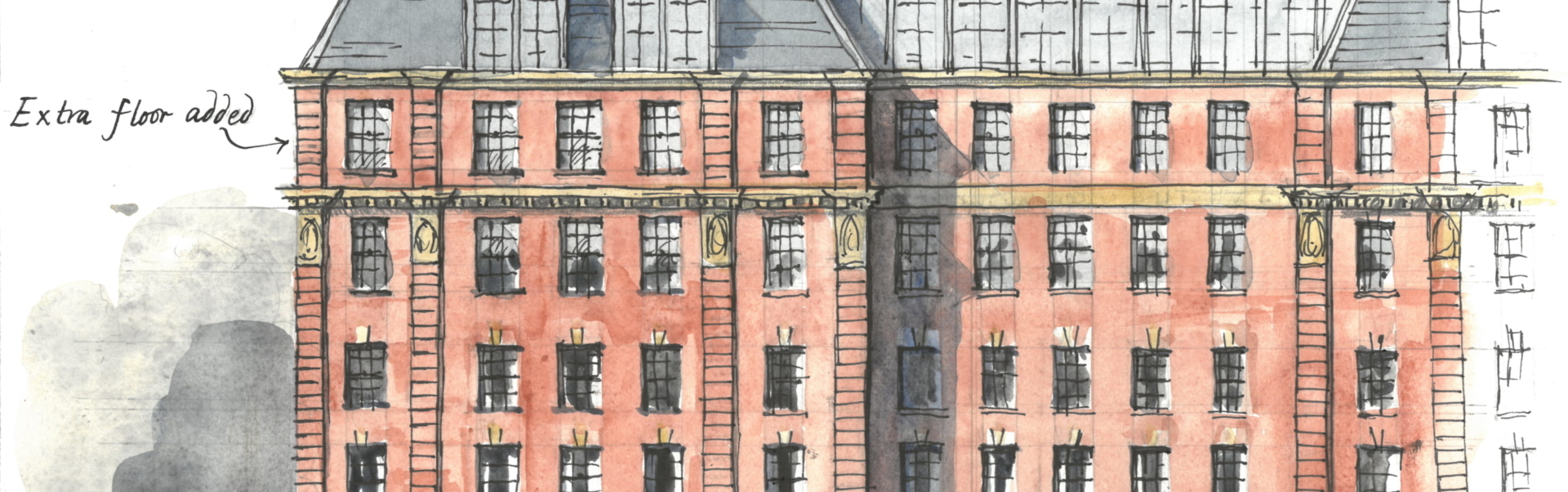
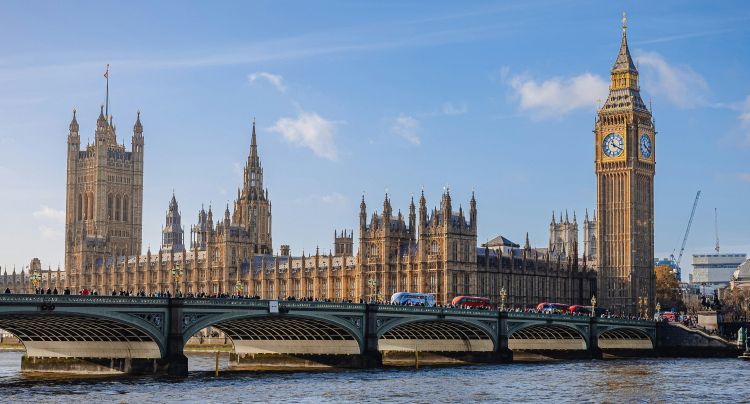
Our founder, Nicholas Boys Smith’s essay in The Critic on Parliament’s Restoration and Renewal programme, has led to much discussion and comment. In his essay, ‘Call for the King’, Nicholas did not pull his punches arguing:
‘These proposals are a scam, total scope-creep, utterly out of control, conceptually confusing the necessary with the needless and jolly ugly to boot. They must be stopped. They are a cancer infecting the physical heart of parliament with their deracinated Dubai hotel aesthetic, their protracted disruption and their indefensibly pointless cost. If ever we had need of the King’s common sense in place of elite lunacy, we have need of it now.’
The article has prompted a lively reaction with strong views on both sides.
Nicholas’s article has been reprinted in The Sunday Times and discussed by Alice Thomson in The Times, Charles Moore in The Telegraph and by Ed Balls and George Osborne on their podcast, Political Currency. Nicholas has appeared on Times Radio and on GB News with Tom Harwood, focusing on the core question of proportionality: how to renew building services and safety systems sensibly, while avoiding a process that becomes self-justifying and ever-expanding. Michael Gove called the essay ‘a brilliant piece and 100% right.’ Both Daniel Hannan and Stephen Pollard said the argument was ‘devastating.’ Matt Ridley called it ‘superb’ while Christan May judged it ‘tremendous.’
What is all the fuss about? Do read Nicholas’s article to find out.
On 17 February, HM Opposition announced their rejection of the plans for Parliament so the consensus is, deservedly, breaking.
For Create Streets, the debate matters well beyond Westminster. It goes to a wider theme: how does Britain looks after its inheritance without treating good stewardship as a blank cheque? How public bodies can insist on clear scope, clear accountability and design that respects what makes historic places worth preserving in the first place? How can we care about what the population likes, not just elite opinion? Elite opinions often differs from wider tastes due the ‘design disconnect’?