In 2012, driving to B&Q to buy pot plants, I passed a major 'regeneration' development in London so hideous and soulless that I ended up resigning from my job in the City determined to find a better way to create desperately-needed new homes.
My mission started that day. I set out to research what makes a happy, prosperous and resilient place, and how developers could be encouraged, at an early stage, to work with the community to avoid local conflict and years of expensive appeals. Create Streets is the umbrella social enterprise that gathers neighbours, architects, planners, academics and local leaders to find solutions to that challenge. Our ground-breaking research has had a major impact on Government policy and on developments from Cumbria to Cornwall.
Nicholas Boys Smith
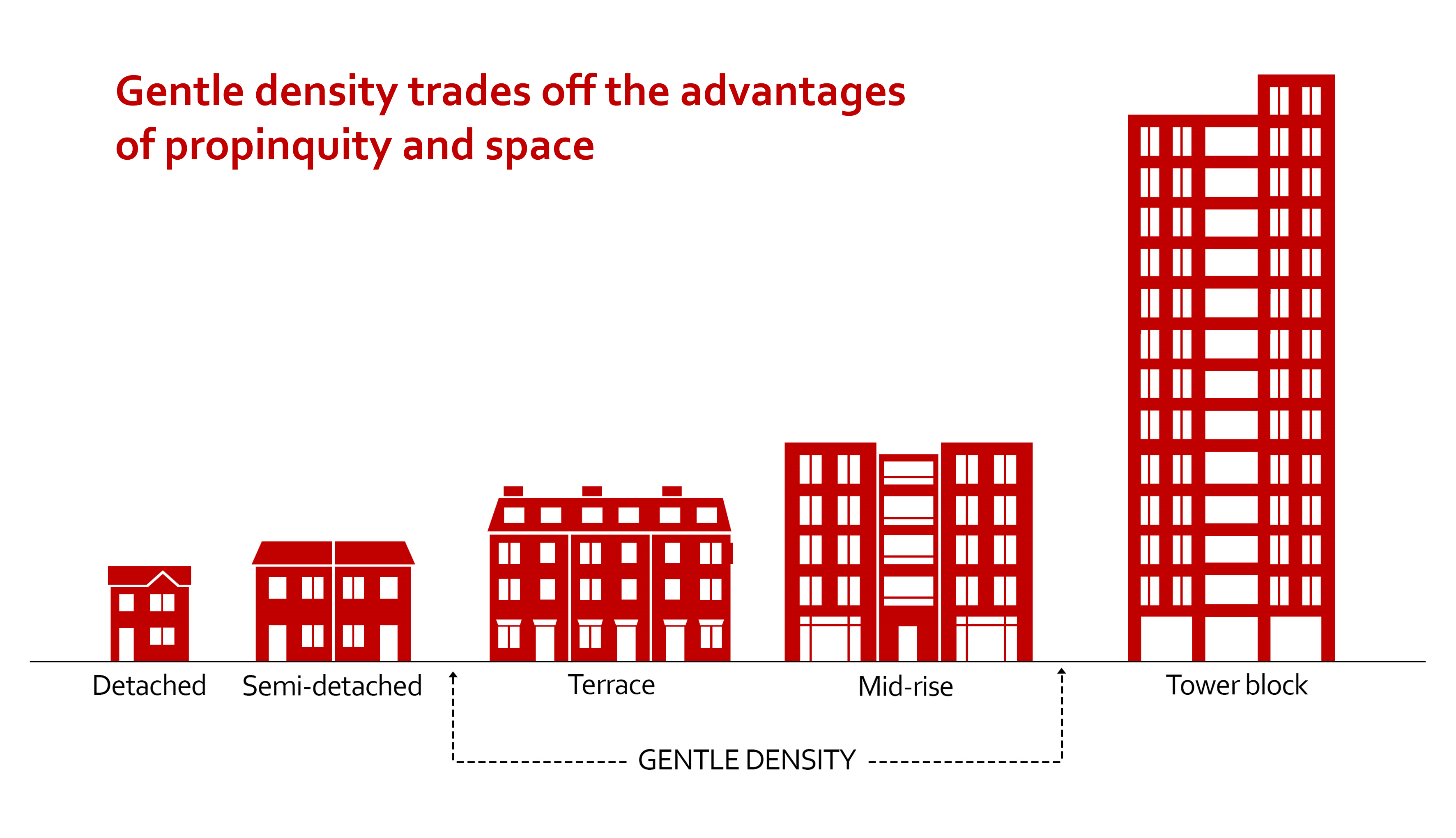
Create Streets is a social enterprise, design practice and specialist think tank. We grew out of a report, Create Streets, which our founder Nicholas Boys Smith wrote and co-published in 2013 on how to solve London's housing crisis with 'gentle density' streets of terraced houses and mansion blocks.
Our first project was a high-profile counter-proposal to the usual dreary modernism on offer for Mount Pleasant in central London, worked up on behalf of local residents alongside classical architect Francis Terry. It won 99 per cent support from local people - proof, from day one, that popular, beautiful development is possible when neighbours are brought into the process early.
What we do
Create Streets leads research, master-planning, design coding and community co-design to help create and steward beautiful, popular places that people can love for generations. In short: we research the links between urban form and wellbeing, health, sustainability, prosperity, value and popularity; we advise communities, landowners, councils and developers; we lobby for necessary policy change; and we help communities and long-term investors develop exemplary schemes and better manage the streets and public spaces they already have.
We talk to developers, landowners, politicians and the public, and work across the political spectrum. We run courses of our own, with the University of Oxford, and with our friends at ADAM Architecture, and our annual summer school is held at Sherborne School in Dorset - we are also working towards a new school of architecture in Britain.
Our purpose is to reverse the harm done by a century of 'traffic-modernism' and to transform, for generations, the way we create new streets and buildings and steward existing ones - improving civic wealth, collective prosperity and our ability to tread more lightly on the planet. We are as concerned with the quantity of new homes Britain needs as we are with their quality: the two, we believe, are intimately linked. Beyond architecture, we work on urban morphology, greenery, community empowerment, active transport and trams - our national trams network launched in 2024, building on our 2023 'greening up' report.
Our associated charity, the Create Streets Foundation is a separate organisation with its own website, worth a visit if you want to read more about its work in education, and support to communities in deprived areas.
Two strengths underpin everything we do
Evidence. Over more than a decade we have built an unrivalled compendium of research into the relationship between place and human outcomes - what places and buildings people like, where people feel at home, what makes neighbourhoods prosper, and why. We have published over 120 books, reports, articles and papers. This research base, corroborated by pricing data, behavioural data and our own visual preference surveys run across the country and internationally, is the kernel of everything we do.
Listening. We nearly always start a project by asking the people who live nearby what they like — through our online platform, Create Communities, or in person at schools, markets and fairs. The answer is remarkably consistent: most people prefer older, tighter, prettier streets built from local materials, with the texture, variety and sense of home that too many modern developments avoid. We call the gap between what most people want and what most professionals design the 'design disconnect' - and closing it is central to our work.
How we started
For our first few years, Create Streets was Nicholas working from his dining table, funded by small slivers of grant income. Our first book, Heart in the Right Street (2016), examined the links between design, urban form and mental wellbeing, and is still in print. We lost our first fights — including at Mount Pleasant, where the then Mayor of London, Boris Johnson, called our proposal 'very beautiful' but approved the conventional scheme anyway — but we kept making the case, locally and nationally.
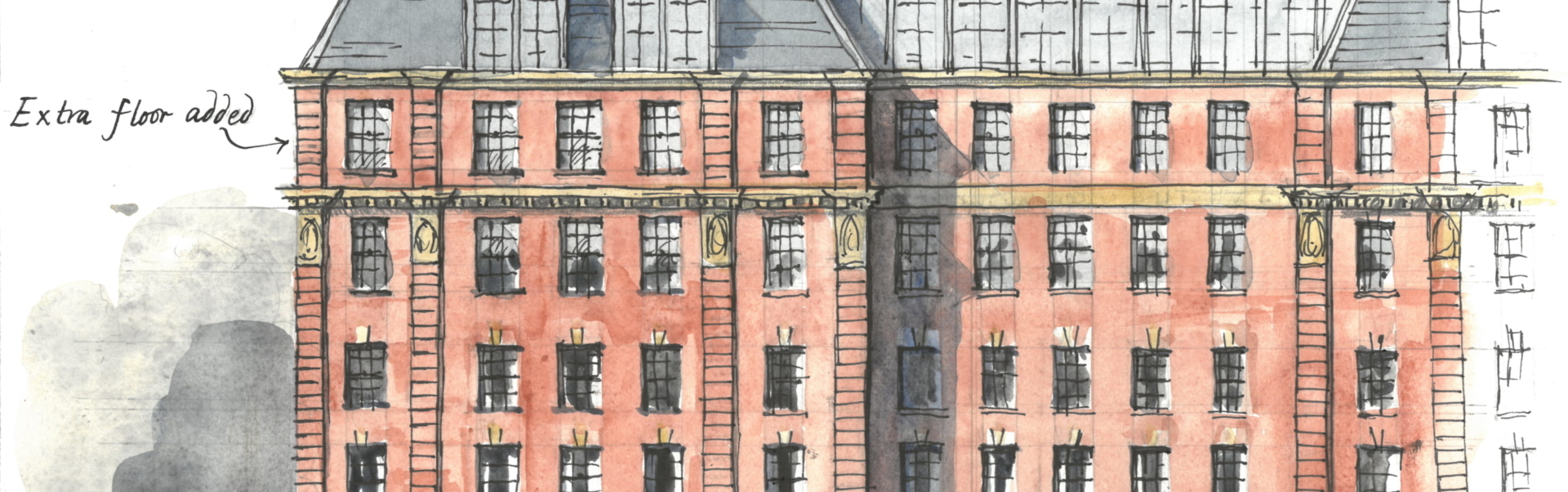
Our first real victory was saving the Sutton Estate, a set of Edwardian mansion blocks in Chelsea, from demolition - retention and intensification was built instead. We also helped residents in West London save Empress Place, a Victorian street, by showing how it could be 'plugged into' a new development nearby.
In 2015 we drafted and supported a private member's bill in the House of Lords to embed popular preferences into planning. It didn't pass, but it started a conversation that has never really stopped — one that has since drawn in successive governments, parliamentarians and fellow think tanks.
From campaign to policy
That conversation gathered pace. Nicholas served on Lord Heseltine's estate regeneration panel and, alongside the late philosopher Sir Roger Scruton, on the Government's Building Better, Building Beautiful Commission, which he went on to co-chair. Reporting in January 2020, the Commission argued that England's planning system should become more visual, more certain and more responsive to local preference - an approach it summed up as bringing 'the democracy forward'.
Slowly, and despite the disruption of the pandemic, that thinking has become policy. 'The creation of high-quality, beautiful and sustainable buildings and places' is now a fundamental aim of the English planning system, street trees are required in new developments, and rules that made tightly-woven, gentle-density streets harder to build have been eased. It remains a work in progress under the current Government, but the direction of travel - thanks in no small part to our work - has shifted.
Built to last
The most sustainable building is the one nobody ever wants to pull down - not the one with the lowest carbon footprint on the day it opens. That is why we design and advocate for buildings that belong in their setting: built where possible from local materials, in forms and proportions that reflect regional character rather than an interchangeable international style. Places like this earn civic pride, and pride is what lets a building be reused and adapted — from family home to offices to shops and back again - across generations of owners, rather than demolished the moment its first use passes.
This is also good economics. Popular, enduring buildings hold their value and cost less to maintain over time, making them a sounder long-term investment than buildings designed for a single generation's use. Long-term economic viability and true environmental sustainability, in our experience, point in exactly the same direction.
Where we work today
Councils, landowners and communities now come to us to write local street and building design policy and to help 'left behind' towns re-stitch their urban fabric rather than sprawl into the countryside. In Lichfield, our work with the district council unlocked a stalled site by building a public consensus for gentle-density expansion that 'feels like Lichfield'; in Devon, working with a local landowner, our masterplan increased the number of homes on a site from 34 to 44 while winning praise from local councillors. We are working on town and village extensions from Cumbria to Somerset, and increasingly further afield - from California to New South Wales, and on street-design and master-planning projects from the Caribbean to the Middle East.
Alongside this, the Create Streets Foundation runs the Place Champions programme, supporting community groups in less prosperous neighbourhoods to influence their local area - including a long-running partnership with East Marsh United in Grimsby, where residents have planted over a thousand trees and are now re-greening Rutland Street itself. The Foundation also runs a growing programme of master classes in urban design and architectural drawing from our London home, alongside our flagship summer school in Sherborne. Visit the Create Streets Foundation website to find out more.
Who we are
Across Create Streets and the Create Streets Foundation we are a team of a dozen master-planners, architectural designers, street designers and research specialists, supported by operational colleagues. We are based in a converted Edwardian shop on Lambeth Walk in London - an historic high street bombed in the Blitz and then heartlessly redeveloped, which we think of as a small metaphor for the damage done to Britain's towns over the past century. We call our office our 'home': designed to feel like a cross between a library and a traditional pub rather than a conventional office, because our colleagues are our friends.
What's next
We are, by our own admission, in no immediate danger of completing our mission. We are here for generations, working to make the way we create and steward our towns, cities, streets and squares more beautiful, popular, durable and humane. If you are visiting London, our door is always open.