
Create Streets are today publishing a report by our founder and chairman, Nicholas Boys Smith, explaining how fast roads through old villages are slicing British villages in two, creating Highway Halves and how to fix it.
- Many of Britain’s 6,116 villages and small communities have an A-Road running through them.
- For A-Roads are predominantly rural. 75.4 per cent of the length of British A-Roads are rural.
- For example, the 56 miles of the A140 from Needham Market to near Norwich in East Anglia slices through four villages, approximately one Highway Half, every 14 miles.
- Thirty-one out of 83 (or 37 per cent) of the villages in the East Riding of Yorkshire have an A-Road running through them.
Nicholas writes:
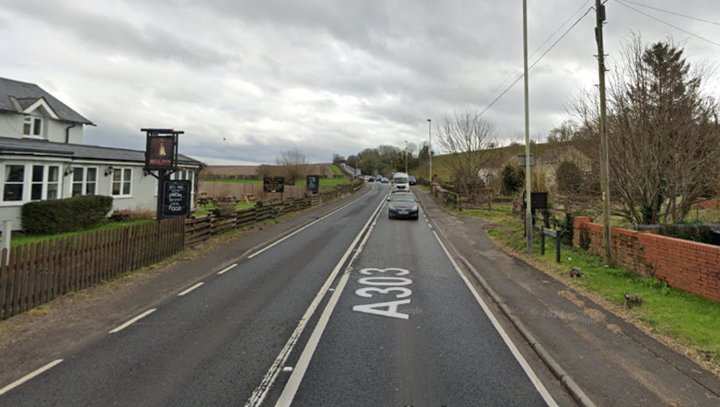
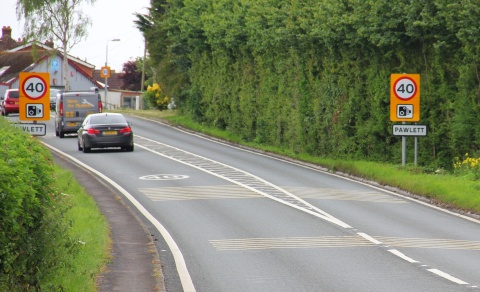
“We’ve all seen them. We’ve all driven through them. From Cumbria to Cornwall and from Somerset to Scotland, thousands upon thousands of Britain’s villages are cut in two. What was once their source of prosperity, taking produce to market, bringing tinkers or blacksmiths or beer for the local pub is no longer a lifeline but a liability. A fast slice of red A-road cutting through the village’s heart, bifurcating one side from the other, bringing pollution, noise and danger, preventing children from gambolling thoughtlessly to see their friends, shattering the ancient window frames and begriming front doors in diesel and soot. These are the Highway Halves, the villages that have been sliced in two.”
Following the work that Create Streets has done re-writing Surrey’s street design code in Healthy Streets for Surrey, Nicholas suggests seven top ideas for improving village streets and curing Highway Halves.
-
- Put the road on a diet. Narrow the carriageway, particularly at the village entrance.
- Green it up. Plant street trees in the carriageway, wherever possible. Even trees planted alongside the carriageway can slow cars by creating a sense of enclosure.
- Raise a table. Raise the carriageway at selective moments to tame the traffic. These raised tables should be combined with crossings, and a narrowing of the carriageway, where possible. This avoids them becoming just a speed hump. Where traffic is very low, have the pavement and carriageway ‘at grade’, in other words at the same level.
- Create continuous crossings. Run a continuous pavement along side streets so that cars must drive briefly over the pavement to turn into side roads. This reduces vehicle turning speeds, says clearly and naturally that ‘people come first’ and tells drivers to slow down without flashing lights or lines.
- Bollard beautifully. Use thick wooden bollards (which can be quite low) to mark out safe spaces to walk naturally. This ‘does the job’ of slowing traffic without becoming too urban or inorganic.
- Use parking wisely. Parking should not dominate a village. However, it is necessary and space needs to be provided. Sited well, parking can help narrow the carriageway and slow down traffic naturally: a win-win!
- Turn tightly. Junctions are often designed to allow easy manoeuvring for large vehicles, rather than for the comfort of pedestrians. Tightening existing curves will make streets easier to cross, reclaim space and crucially slow down traffic.
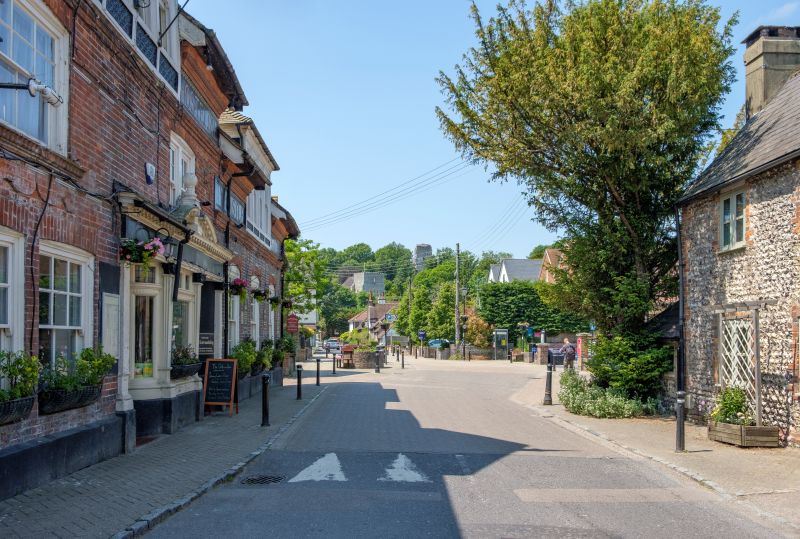
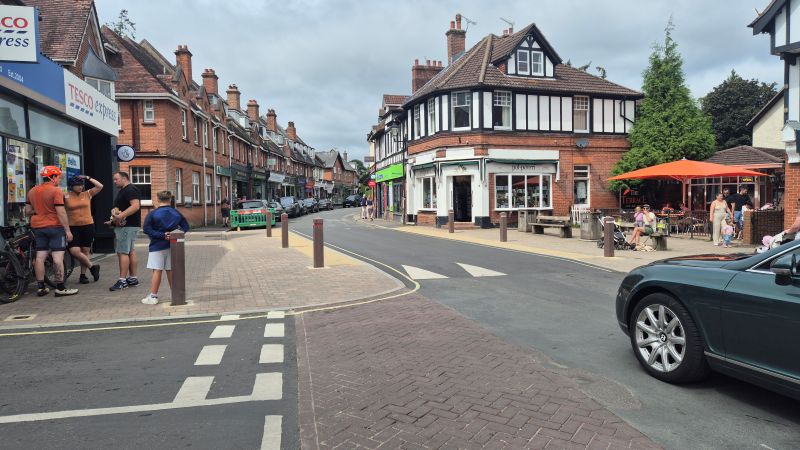
With a handful of exceptions, this can be done without, in any serious way, constraining the flow of traffic. For example: were you to reduce the speed driven from 30mph to 20mph, as cars drive 0.9 miles along the A10 through the village of Harston, Cambridgeshire; journey times would only increase by 54 seconds.
This is not about creating rural traffic jams but simply about putting people first in our villages and cars second so the hearts of our villages can thrive and flourish.
For the villagers, this is their home, their place of heart and refuge, where they’ve chosen to work, to live, to nurture their children or to grow old safely. Let’s put the villages first and their fleeting visitors second.
It’s easy if you know how.
You can read the full report here and read about it in Country Life here.
