
First academic study shows strong correlation between large language models and public preferences
Our founder and chairman, Nicholas Boys Smith, has co-authored an important new peer-reviewed study with Professor Nikos Salingaros of the University of Texas showing that large language models judging which buildings will be more empathetic and friendly can predict public preferences. The study has important implications for how we think about and design our buildings, streets and squares. Writing in The Telegraph, Nicholas explains:
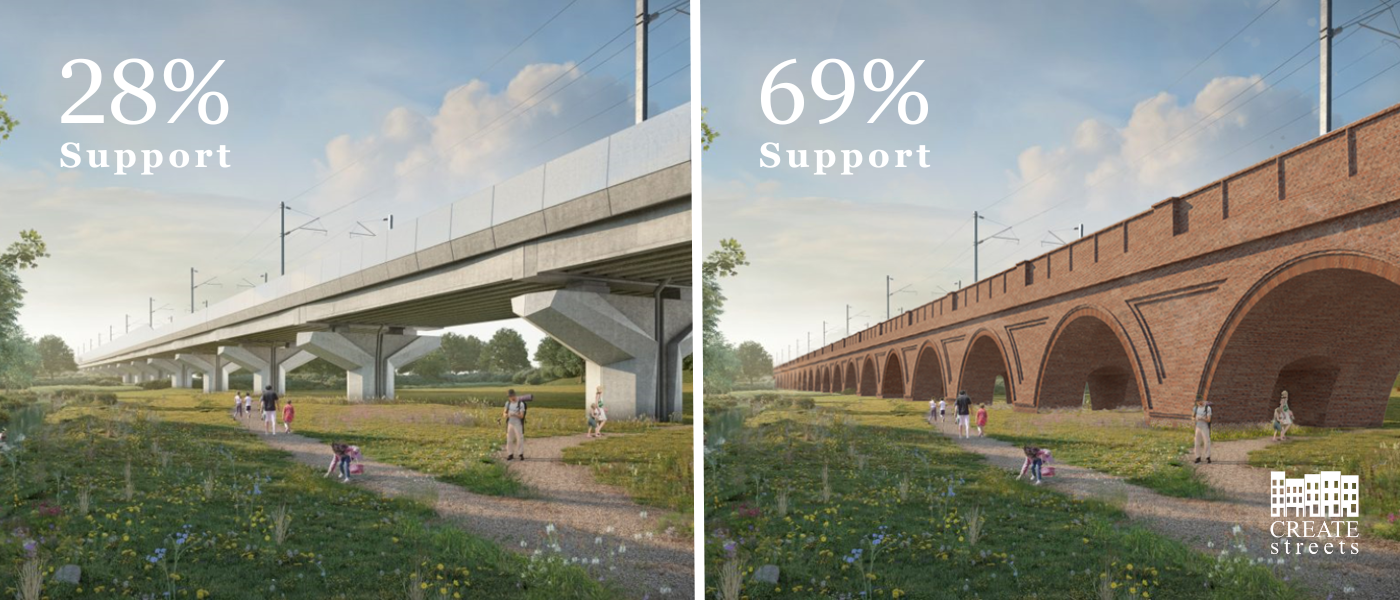
Our method was disarmingly plain. We showed large language models including Chat GPT paired images where independent Deltapoll surveys had already shown public preferences: Bath Rugby’s stadium, an HS2 viaduct and Oxford Street’s Marks & Spencer. We then ran three tests: emotional criteria (beauty, calm, coherence, comfort, reassurance); geometrical criteria from Christopher Alexander’s ‘living geometry’ (levels of scale, strong centres, local symmetry, positive space, alternating repetition); and a simple question: which design feels friendlier?
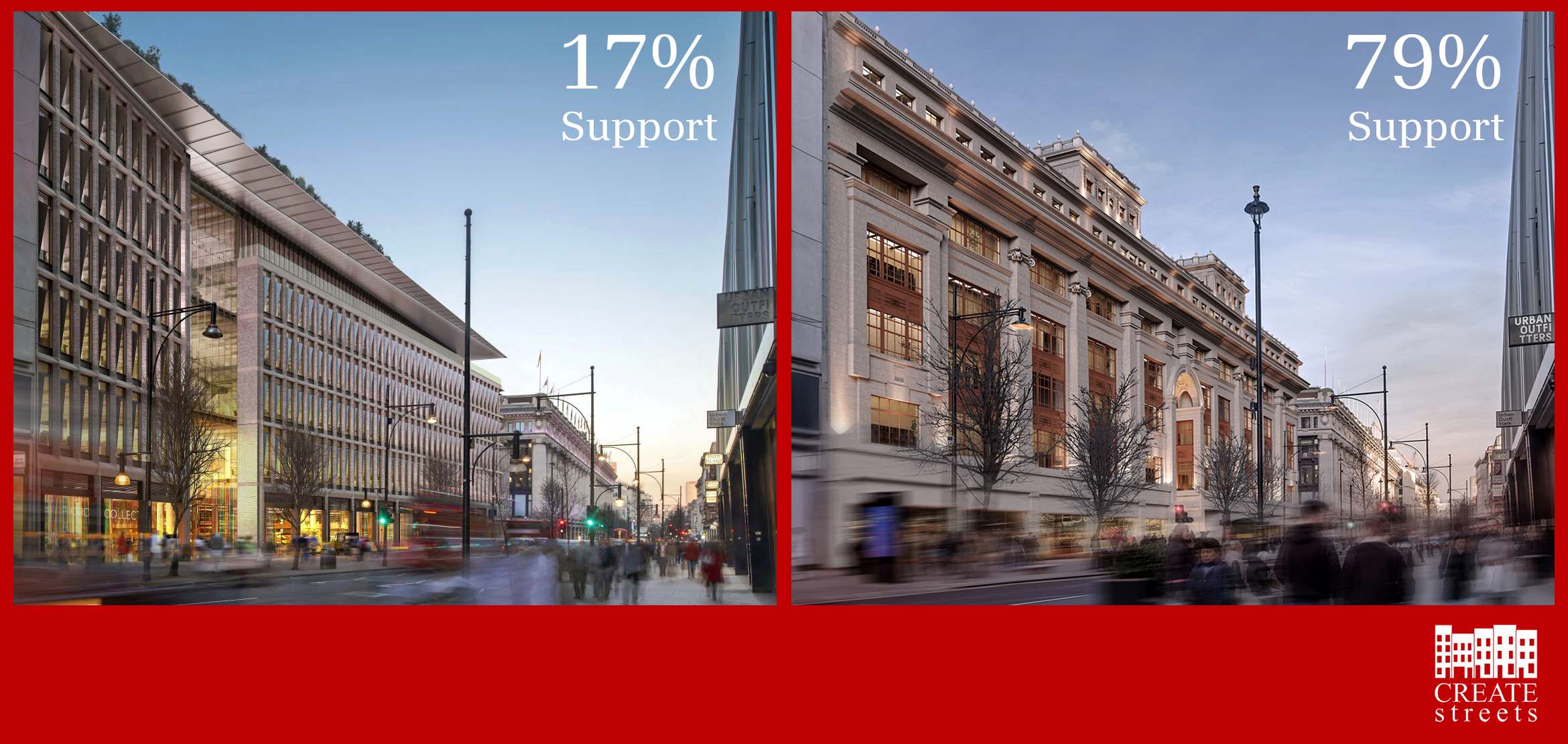
In every case, the models preferred the more human-centred option, matching the independent polling. At Orchard House, where Marks & Spencer wish to demolish a delightful 1930s classical building and replace it with heartless, spreadsheet modernism, the AI consistently chose a traditionally composed alternative by Francis Terry and Create Streets. The public poll showed 79% support for the humane option. The AI’s emotional and geometrical tests were, if anything, more emphatic. Bath told the same story: the people favoured the classical stone stadium. AI agreed. On the HS2 viaduct, the public preferred the design with bricks and detail. The AI again chose the same. Across repeated runs and different AI systems, the results held. 97% of the first two tests and 100% of the test for friendliness agreed with the people. Human-centred design correlates with positive emotions and positive emotions correlate with public preference.
Why does this matter? Because design too often confuses novelty with progress. We have spent a century perfecting an aesthetic that treats people as throughput: over-scaled flatness; endless glass; object-buildings that ignore the street; visual cacophony not public courtesy. The result is places that many quietly dislike but feel powerless to resist. Our findings suggest two uncomfortable truths for the design establishment and one practical route forward.
First, the public are not philistines. Given a clear choice, they pick the design that looks as if it cares for them: façades with depth and pattern; materials that age gracefully; forms that acknowledge human scale; bridges that enrich the landscape rather than besmirch it. Asked to ‘think with empathy’, the AI picks the same.
Second, what is waved away as ‘nostalgia’ is better understood as ‘neuro-aesthetics’. The eye and brain reward legible order and patterned complexity. That is why ‘living geometry’ (layers of scale, repetition with variation, strong centres) keeps appearing in the buildings people love and the streets where they linger. Our tests captured that link.
And the route forward? Make this normal. If we want faster delivery, we must code for the qualities people prefer instead of relying on elite opinion and opaque processes. That means simple, visual design codes for frontages, plots and materials. It means using tools, including AI, to diagnose friendliness early, not to generate ever wilder images. It means treating human preference as the objective, not an optional garnish.
Does AI settle every argument about architecture? Of course not. But it does something valuable. It acts as an impartial mirror, reflecting the emotional reality of our neighbourhoods. Ask it to judge like a human and it prefers the human-centred design. Buildings that look after us help us to feel looked after. Build more of them and we would be more prosperous, content and civilised.
You can read the full study in Designs here and the summary in The Telegraph here.